
Bell Racing Europe SA has reached an agreement with Bell Sports, Inc., a division of Easton Bell Sports, Inc. to extend Bell Europe’s exclusive license to manufacture, distribute and market auto racing helmets and accessories under the Bell Helmets trademark to the territories of North and South America. Easton Bell Sports will maintain operational responsibility for Bell Racing Company until September 30, 2010, at which time; Bell Racing Europe will assume marketing and distribution responsibility for auto racing helmets and related accessory products sold under the Bell brand in these territories.
“Bell Racing Europe has been an outstanding partner in executing our European strategies and we feel this extended partnership will allow synergies that benefit both organizations while strengthening the Bell brand across multiple countries,” said Steve Bigelow, EVP & GM, Bell Sports, Inc. “The decision to expand our relationship with Bell Racing Europe is based on their experience in working with the FIA and our collaborative efforts to develop a new line of auto racing helmets for Bell Racing
Company.”
Bell Racing Europe’s new organization, serving the North and South American markets, will operate under the name Bell Racing USA and will be based in the United States in Champaign-Urbana Illinois. Kyle Kietzmann, current General Manager of Bell Racing Company will join the new organization as President of Bell Racing USA and will be responsible for managing all aspects of the U.S. based operation including sales, marketing, product development, distribution and sponsorship. “Consolidating the Bell Racing Europe and Bell Racing USA operations under common ownership will create a worldwide organization with the mission of developing innovative, technologically superior auto racing helmets that maximize protection and improve driver performance,” said Kyle Kietzmann, President, Bell Racing USA.
“We are passionate about the sport of auto racing and committed to enhancing Bell Racing’s position as the number one car racing helmet manufacturer in the world.”
“We view this as a very positive move” said Martine Kindt-Cohen, CEO Bell Racing Europe and CEO Bell Racing USA. “We’ve been working with Bell since 1985, but the fundamental change happened when we acquired the European and Asian license in 2001. Bell Racing’s work with the FIA on the 8860 Advanced Helmets and on the children’s helmets has given Bell a serious technological advantage which will be implemented in the new Bell Racing
USA product line. We are also very happy to have Kyle Kietzmann as co-owner and President of the new operation; Kyle has been with Bell Auto Racing for so many years, and his experience and motivation are invaluable.”
All helmet products will be designed in the United States and Europe, engineered and
manufactured in Bell Auto Racing’s exclusive 50,000 square foot Asian manufacturing, research and development facility, staffed by over 90 manufacturing and engineering employees and equipped with the latest technologies, manufacturing and testing equipment. The effective date of the agreement will coincide with the launch of the Snell SA2010 standard for auto racing helmets. Bell Racing USA will introduce a completely redesigned 2011 product line on October 1, 2010. The new product line, specially developed for the US market, will incorporate many of the technological innovations and design features developed by Bell Racing Europe for the advanced
FIA8860 super helmets.
The ownership group for Bell Racing USA has over 70 years of combined experience in the auto racing industry and has worked with the world’s greatest drivers in all forms of racing including F1, Rally, Indy Car, NASCAR and NHRA. The Bell Racing USA ownership team includes:
*Martine Cohen-Kindt, CEO, Bell Racing Europe and Bell Racing USA
*Stephane Cohen, President, Bell Racing Europe and Chairman Bell Racing USA
*Stephan Kindt, Sales and Marketing Director, Bell Racing Europe
*Kyle Kietzmann, President and COO, Bell Racing USA.
Bell Racing, founded in 1954, specializes in designing, developing, manufacturing and distributing auto racing helmets to professional and amateur drivers competing in the sport of auto racing and go-karting. More champions in all forms of racing have worn Bell helmets than any other brand. The Bell name is synonymous with quality, performance and engineering excellence.
Easton-Bell Sports, Inc. is a leading designer, developer and marketer of branded
equipment and accessories that enhance athletic performance and protection. The Company markets and licenses products under such well-known brands as Easton, Bell, Riddell, Giro and Blackburn. From Easton to Riddell to Bell to Giro, the brands of Easton-Bell Sports set the standard of design and protective excellence across multiple sports, equipment categories and sales channels. Our commitment to this philosophy and standard is reflected in our unrivaled history and foundational belief in technological innovation. It is the reason each brand holds a strong number one status within key product categories in baseball, softball, hockey, football, cycling as well as snow, action and power sports.
Bell Helmets is a licensed trademark of Bell Sports, Inc. Easton Bell Sports, Inc. retains all rights to the Bell Helmets name and trademark under the terms of this agreement.
Read more!
Tuesday, August 17, 2010


Wednesday, August 4, 2010
Elliott Sadler's NASCAR Crash - Among Hardest Recorded
CHARLOTTE, N.C. -- Elliott Sadler says NASCAR officials told him his head-on collision with the inside retaining wall at Pocono Racing on Sunday was the hardest recorded in the history of the sport.
NASCAR did not give Sadler the number of G-forces recorded by the black box device and the governing body typically does not release that information.
"We do not share those numbers except with the team and the folks at the Midwest Roadside Safety Facility at the University of Nebraska," NASCAR said in a statement.
"They want to meet with me this weekend," Sadler said on Tuesday. "But we were told this morning that it was the hardest one they have in their data in history."
That means harder than Kyle Petty's 2003 crash at Bristol which, according to published reports, was the hardest at the time at more than 80 Gs (80 times the force of gravity).
Other hard hits that NASCAR publicly has claimed among the hardest include Dale Earnhardt Jr.'s 2003 crash at Talladega, David Reutimann's 2007 crash at California and Jeff Gordon's 2008 crash at Las Vegas.
Sadler amazingly walked away from his crash with only a sore right shoulder and collarbone, and minor scrapes from the seat belts. He credited the HANS device (Head and Neck restraint), the carbon fiber seat designed by Hendrick Motorsports and new safety designs NASCAR implemented in the new car for protecting him.
"I'm very thankful for that," Sadler said. "I think 10 years ago in the aluminum seat and no HANS and having that same wreck we'd be maybe talking about something different now."
Sadler issued a challenge to Pocono Raceway to bring track standards up to car standards. He was assured by NASCAR president Mike Helton that the governing body is working with the track to make that happen.
Track officials had said before the race that they planned upgrades, but didn't have time in the six weeks between the June event in which Kasey Kahne nearly went over the backstretch wall on Sunday. Among the expected improvements are SAFER barriers on several inside walls such as the one Sadler hit, a catch fence on the back stretch and possibly a skid pad to replace the grass runoff area that Sadler slid through.
"This is 2010, not 1970," said Sadler, who won Saturday's Truck Series race at Pocono. "We have a lot of knowledge now on SAFER barriers, things the tracks can do to help us in case we're in a wreck.
"If you want to be a part of the Sprint Cup series and Nationwide Trucks you should be held accountable to have the latest and greatest safety stuff available just like the teams and NASCAR do with the cars."
David Newton covers NASCAR for ESPN.com. He can be reached at dnewtonespn@aol.com.
Taken from http://sports.espn.go.com/rpm/nascar/cup/news/story?id=5435268
Read more!
Wednesday, June 30, 2010
Jordan Williams unhurt after dramatic crash at Snetterton

Briton escapes without injury after multiple barrel roll
Jordan Williams escaped completely unhurt from a dramatic crash in the second race of the weekend at Snetterton (Saturday 26 June).
Williams had taken his first ever single seater victory in the opening race, having jumped pole sitter Nigel Moore at the start of the race, propelling him into third in the overall standings.
The 19-year-old couldn't replicate his great start in race two, however, and slipped back one place to third as Maxime Jousse passed him away from the line. Williams settled in behind Jousse around Riches and Sear corners, before boosting down the Revett straight as he attempted to reclaim second on the entry to the Esses.
Williams' boost coincided with Jousse missing a gear, creating a big speed differential between the pair. As Williams went to the inside to overtake, however, Jousse can be seen to move across the young Briton's path, with Williams' car unavoidably hitting Jousse's rear and becoming airborne.
In what is a huge testament to the strength and safety of the Formula Palmer Audi car, Williams' car then rolls five times down the straight before eventually coming to a rest, with Williams able to jump out of the car almost immediately.
Despite the crash, for which Maxime Jousse was officially reprimanded, Jordan was able to contest the final two races of the weekend the next day in a spare car - demonstrating great determination and resolve to take a top ten finish in the final race of the weekend.
You can watch onboard footage of the dramatic incident, including riding with Jordan Williams, below:
Taken from - http://www.formulapalmeraudi.com
Read more!
Tuesday, May 18, 2010
Interview with Dr. Robert Hubbard - HANS Device Inventor
FOX Sports Interview with Dr. Robert Hubbard, the inventor of the HANS Device.
<a href="http://video.msn.com/?mkt=en-us&amp;brand=foxsports&amp;playlist=videoByUuids:uuids:f45549c8-2f23-4691-9819-43b71a3a7895&amp;showPlaylist=true&amp;from=IV2_en-us_foxsports_videosearch&amp;fg=everyzing" target="_new" title="Wind Tunnel: Dr. Robert Hubbard">Video: Wind Tunnel: Dr. Robert Hubbard</a>
Taken from: http://multimedia.foxsports.com/m/video/30544424/wind-tunnel-dr-robert-hubbard.htm?pageid=15362&seek=3.009
Read more!
Read more!
The Top 5 Stories that Changed Sports this Decade
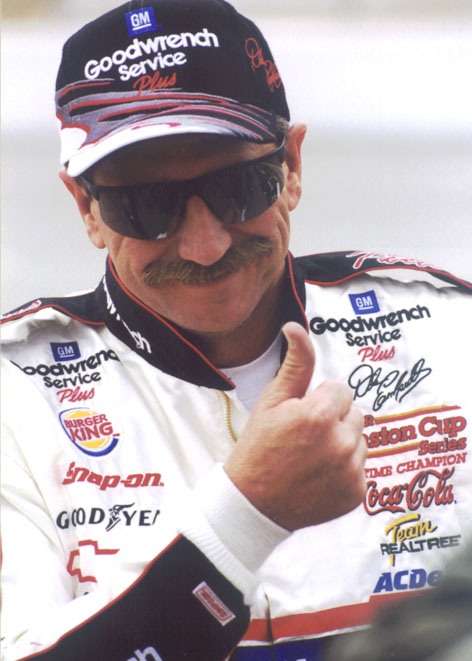
The top 5 stories that changed the world of sports as we know it in the 2000s.
#5 – Dale Earnhardt’s death in the 2001 Daytona 500; February 18th, 2001.
Sports heroes are not supposed to be killed suddenly in a sport they love. However, it does happen. On Sunday, February 18th, 2001, on the final lap in NASCAR’s season-opener, the Daytona 500, Dale Earnhardt slammed the outside retaining wall in turn 4. As the field passed by, Earnhardt’s car slid to the infield, as the car he owned driven by Michael Waltrip won the Daytona 500. Rescue workers rushed to Earnhardt’s car, where he was airlifted to a local hospital, and later pronounced dead.
Sometimes it takes tragedy to find a fault in a sport. Following the incident, NASCAR took many steps to ensure driver safety. They began the mandated use of the HANS device, a head-and-neck restraint system. Just recently, the new Car of Tomorrow was introduced to make the car safer.
Unfortunately, it often takes tragedy to show that change is necessary.
Taken from:
http://section26sports.wordpress.com/2010/01/02/the-top-5-stories-that-changed-sports-this-decade/
Read more!
2010 Snell Ratings

Head Form = Circumference
A= 50 cm
C= 52 cm
E= 54 cm
J= 57 cm
M= 60 cm
O= 62 mm
The biggest change in the new helmet safety standard is they are going to adopt variable head form sizes. In prior Snell standards, they tested the helmets using a standard sized “dummy” head with a standard circumference to mimic the size, shape and weight of a human head. The new 2010 standard is going to require a number of variable head forms that will better approximate the cubic mass and circumference relationship of various head sizes. Everyone obviously does not have the same head size, so Snell is requiring the manufacturers to create six different head forms to test.
Every helmet size will be a little more unique. Manufacturers are going to have to change construction somewhat between sizes in a given model and this is requiring them to look at new, advanced shell construction methods to give them as light a weight shell as possible that’s also as strong as possible. For each helmet tested, it is dropped twice and there are different criteria for the first and second drops depending on head form size.
Since the helmets will be properly sized to the actual head geometry of the racer, it’s going to be a better helmet because it’s not going to shift or move during an impact.
With advances in head and neck restraint systems (HNR),such as the HANS Device, the new Snell standard will have a component that will test for compatibility of the helmet shell with the HNR. The attachment anchor points (where the device attaches to the helmet) will require proper reinforcement in those areas to withstand lateral shear force that they may see in an impact. Manufacturers will most likely view the helmets and HNR as part of an overall driver safety system.
Snell introduces new helmet ratings every five years. If you have an SA2005 helmet, it should be compatible for some time to come. When the SA2005 standard was introduced, most sanctioning bodies started phasing out the use of SA95 helmets. For those that will be interested in getting one of the new SA2010 rated helmets, availability from manufacturers will most likely begin in October 2010 and be phased in throughout 2011.
If you would like to read more about Snell testing and standards, you can visit their website at www.smf.org.
Read more!
Wednesday, February 10, 2010
Brands Hatch Makeover.

The track has been resurfaced from mid-way down Cooper Straight, through McLaren, around Clearways and down the Brabham Straight to the centre of the pit complex using Prixmat surface material, well known for its high performance friction surface qualities.
 Other circuit improvements include the addition of new kerbing at the exit of Druids, reinforcing the area behind the kerb on the exit of Graham Hill Bend and reducing the width of the tarmac run-off at the bottom of Paddock Hill Bend.
MotorSport Vision Chief Executive Jonathan Palmer said, “This resurfacing project represents a major investment in Brands Hatch. Even in these tough economic times, MSV is committed to developing and improving our circuits. It will be interesting to see what effect the new surface has on lap times.”

Read more!
Subscribe to:
Posts (Atom)