Monday, August 23, 2010

Elliott Sadler's NASCAR Crash -Crash Report

CONCORD, N.C. -- Sam Johns stands next to the remains of Elliott Sadler's car that almost went head-on into an inside retaining wall on Sunday at Pocono Raceway. The director of operations at Richard Petty Motorsports isn't wearing rubber gloves and his pockets contain no swab boxes, but make no mistake, this is a CSI-type investigation.

CSI Concord, we'll call it.

In this case, the investigation isn't to determine how someone was killed, but how a life was saved -- or at least how a serious injury was prevented.

Normally, the car would have been torn down and discarded into the junk pile within hours of arriving at the shop on Monday. Because of the severity of the crash -- NASCAR officials told Sadler it was the hardest-recorded in the sport's history -- it may be days, weeks or months before this case is completely closed.

As Johns speaks, Hendrick Motorsports officials are on their way to pick up the carbon fiber seat their company built to perform X-rays to make sure nothing was compromised. Sadler's helmet, seat belts and HANS (Head and Neck restraint) device also are being shipped off for further evaluation.

The same goes for the oil lines and any other parts that are constructed outside these walls.

This is as close to an autopsy as you'll find in auto racing when death isn't involved.

"We've been slow and meticulous on this, taking it apart to make sure areas didn't fail where we don't know just looking at it," Johns said. "The biggest thing we can do after a crash like this is continue to learn and educate ourselves."

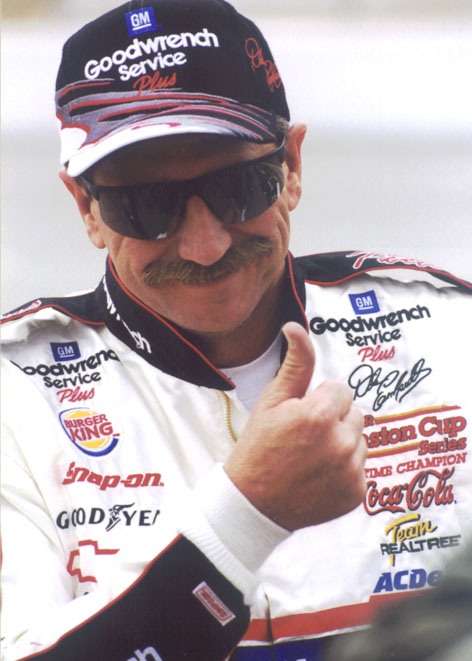
Safety education became more a priority than ever after Feb. 18, 2001, the day Dale Earnhardt was killed on the final lap of the Daytona 500 with an impact to the right front similar to Sadler's. It's why drivers are required to wear the HANS and six-point seatbelt, why NASCAR developed the new car with the seat further from the door, a higher ceiling in the roll cage and crush zones, and why HMS developed the carbon fiber seat.

It's probably a good reason why nobody in NASCAR's top three series has been killed in a crash since that dark day.

It's why Sadler walked away on Sunday with only a few bumps and bruises -- not even a headache the next day.

People can call this car ugly all they want, but it sure looked beautiful from where Johns was standing.

"There's been times we've complained a lot about the car, but boy it has done its job from a safety standpoint," Johns said.

No doubt. And Sadler has no doubt he would have been seriously injured -- or worse -- in the old car without the latest innovations.

"Ten years ago in an aluminum seat and no HANS and having that same wreck in the old car we'd be talking about something different now," Sadler said. "All the tedious stuff that NASCAR holds teams accountable for, I understand that better after a wreck like this."

Reenacting the incident

Before we get back to the dissection of the car, let's reenact what happened.

Sadler was coming off Turn 1 with Sam Hornish Jr. and Reed Sorenson racing side by side in front of him. He was drafting to catch them when he noticed smoke from an incident that he later discovered began with Jimmie Johnson getting into the back of Kurt Busch.

As Sadler slowed like the cars in front of him, teammate AJ Allmendinger got into his rear bumper. When Allmendinger turned right, Sadler's car shot to the left, slid through the grass and into the retaining wall where the right front took the biggest blow.

Sadler didn't anticipate a hard hit. He figured at worse he'd glance off the rail, get the damage repaired and continue the race.

"All of a sudden it was holy … " Sadler recalled.


Replays slowed frame by frame by Johns and NASCAR show Sadler's body lunged forward at least six inches. Sadler doesn't remember this, but knows, were it not for the HANS and six-point harness that allowed his body to move all at once instead of the whiplash effect that led to Earnhardt's death, he might not be here to talk about it.

The six-point harness that was mandated to replace the five-pointer in 2007 gets overlooked a lot because of the HANS, but it played a major role. It kept the pelvis area in place -- the five-pointer allowed the body to slide forward -- and forced Sadler's body to move from the waist down in unison.

That put most of the stress on the upper body that absorbed much of the blow instead of creating a whipping motion that could have created problems. It knocked the breath out of Sadler and the belts broke the skin slightly, but nothing more.

As the car bounced off the wall, spun around and totaled the rear of the car, the engine flew out. The best Johns could figure was that the mounts were broken on impact. There's a large dent near the gas pedal where the engine first lunged, but no major structural damage to the shell that protected Sadler.

The car eventually came to rest with the engine not far away. Sadler was able to climb out on his own, and had enough awareness to lay flat on the ground to stretch his abdomen while trying to catch his breath.

Officials don't have much more to go on in determining exactly what came off the car at what time because there's only one 5- to 10-frame video captured near the point of impact. An aerial shot is usually the most helpful, but there was none.

What officials know is the fuel line inside the car wasn't compromised, that the front end suspension collapsed as it was supposed to and the tethers in place to hold wheels, hood and other parts together did their job.

"To me, the most important thing was the driver cockpit was in one piece," Sadler correctly surmised. "That did its job. The HANS device did its job. The knee knocker in between my legs did its job.

"All that did well."

Back to the autopsy

Tom Gideon was in his car listening to the race on the radio when he heard about the collision. Before the car was returned to the garage on two wreckers, NASCAR's director of safety initiatives was in communication with track officials.

By Monday morning, Gideon was at RPM with three inspectors going piece by piece through the wreckage. Sometimes they bring the car to the Research and Development Center in Concord, but RPM being across the street made it easy.

The initial survey?

"Everything worked pretty good," Gideon said.

For more than an hour Gideon and his crew went over the car trying to determine how each part worked. The tether system for the most part held together, but there were pieces separated from the car that will require further research to see what happened.

"We don't want parts to come off," Gideon said.

Most of the focus was on the shell and everything inside of it. Despite a few wrinkles on the dash and floor, nothing unusual.

"You can see right there where the engine started to get back into the car," said Johns, pointing to the dent near the gas pedal. "But for the most part everything did a real good job."

You can't say enough about how well the carbon fiber seat worked in tandem with the HANS and six-point harness. Keeping the driver stable is the No. 1 priority. It helps prevent basal skull fracture that was ruled the cause of Earnhardt's death.

It's actually quite amazing to see how intact the shell was. Other than the mangled gas pedal and minor movement of the firewall, one would hardly know it had suffered trauma.

“ We're still studying it. We still have data coming in. … We're all the time looking at getting stronger. We never rest. Nobody wants to see anybody get hurt. ” -- Tom Gideon, NASCAR director of safety initiatives

Because Sadler is taller than most drivers, having the additional head room in the new car didn't hurt either. What little movement his body made wasn't impacted by contact with the roll cage.

Because all chassis have to be certified at the R&D Center, each should be able to take on the same blow with similar results. With the old car, teams often made tweaks that could change the outcome and make the data collected after such a crash less consistent.

As bad as this looked on TV, it's a valuable test for NASCAR and teams.

"This test apparently worked well," Gideon said.

What most impressed about this process was how open RPM has been with NASCAR and other teams. There was no rushing to cover up areas of the car where the organization may have found an advantage. If a competitor calls with questions, response is quick.

"When we're talking about safety of the drivers, it's not a competition thing now," Johns said. "We all need to protect our drivers. We'll share whatever information we can with a team."

That wasn't always the case before 2001. Live -- or in that case die -- and learn.

This is no crime scene, but it certainly is treated like one for the sake of safety.

"We're still studying it," Gideon said. "We still have data coming in. … We're all the time looking at getting stronger. We never rest. Nobody wants to see anybody get hurt."

Taken from http://m.espn.go.com/rpm/story?storyId=5440211&pg=1

Read more!

Tuesday, August 17, 2010

BELL RACING EUROPE ACQUIRES BELL RACING USA

Bell Racing Europe SA has reached an agreement with Bell Sports, Inc., a division of Easton Bell Sports, Inc. to extend Bell Europe’s exclusive license to manufacture, distribute and market auto racing helmets and accessories under the Bell Helmets trademark to the territories of North and South America. Easton Bell Sports will maintain operational responsibility for Bell Racing Company until September 30, 2010, at which time; Bell Racing Europe will assume marketing and distribution responsibility for auto racing helmets and related accessory products sold under the Bell brand in these territories.

“Bell Racing Europe has been an outstanding partner in executing our European strategies and we feel this extended partnership will allow synergies that benefit both organizations while strengthening the Bell brand across multiple countries,” said Steve Bigelow, EVP & GM, Bell Sports, Inc. “The decision to expand our relationship with Bell Racing Europe is based on their experience in working with the FIA and our collaborative efforts to develop a new line of auto racing helmets for Bell Racing
Company.”

Bell Racing Europe’s new organization, serving the North and South American markets, will operate under the name Bell Racing USA and will be based in the United States in Champaign-Urbana Illinois. Kyle Kietzmann, current General Manager of Bell Racing Company will join the new organization as President of Bell Racing USA and will be responsible for managing all aspects of the U.S. based operation including sales, marketing, product development, distribution and sponsorship. “Consolidating the Bell Racing Europe and Bell Racing USA operations under common ownership will create a worldwide organization with the mission of developing innovative, technologically superior auto racing helmets that maximize protection and improve driver performance,” said Kyle Kietzmann, President, Bell Racing USA.

“We are passionate about the sport of auto racing and committed to enhancing Bell Racing’s position as the number one car racing helmet manufacturer in the world.”

“We view this as a very positive move” said Martine Kindt-Cohen, CEO Bell Racing Europe and CEO Bell Racing USA. “We’ve been working with Bell since 1985, but the fundamental change happened when we acquired the European and Asian license in 2001. Bell Racing’s work with the FIA on the 8860 Advanced Helmets and on the children’s helmets has given Bell a serious technological advantage which will be implemented in the new Bell Racing
USA product line. We are also very happy to have Kyle Kietzmann as co-owner and President of the new operation; Kyle has been with Bell Auto Racing for so many years, and his experience and motivation are invaluable.”

All helmet products will be designed in the United States and Europe, engineered and
manufactured in Bell Auto Racing’s exclusive 50,000 square foot Asian manufacturing, research and development facility, staffed by over 90 manufacturing and engineering employees and equipped with the latest technologies, manufacturing and testing equipment. The effective date of the agreement will coincide with the launch of the Snell SA2010 standard for auto racing helmets. Bell Racing USA will introduce a completely redesigned 2011 product line on October 1, 2010. The new product line, specially developed for the US market, will incorporate many of the technological innovations and design features developed by Bell Racing Europe for the advanced
FIA8860 super helmets.

The ownership group for Bell Racing USA has over 70 years of combined experience in the auto racing industry and has worked with the world’s greatest drivers in all forms of racing including F1, Rally, Indy Car, NASCAR and NHRA. The Bell Racing USA ownership team includes:
*Martine Cohen-Kindt, CEO, Bell Racing Europe and Bell Racing USA
*Stephane Cohen, President, Bell Racing Europe and Chairman Bell Racing USA
*Stephan Kindt, Sales and Marketing Director, Bell Racing Europe
*Kyle Kietzmann, President and COO, Bell Racing USA.

Bell Racing, founded in 1954, specializes in designing, developing, manufacturing and distributing auto racing helmets to professional and amateur drivers competing in the sport of auto racing and go-karting. More champions in all forms of racing have worn Bell helmets than any other brand. The Bell name is synonymous with quality, performance and engineering excellence.

Easton-Bell Sports, Inc. is a leading designer, developer and marketer of branded
equipment and accessories that enhance athletic performance and protection. The Company markets and licenses products under such well-known brands as Easton, Bell, Riddell, Giro and Blackburn. From Easton to Riddell to Bell to Giro, the brands of Easton-Bell Sports set the standard of design and protective excellence across multiple sports, equipment categories and sales channels. Our commitment to this philosophy and standard is reflected in our unrivaled history and foundational belief in technological innovation. It is the reason each brand holds a strong number one status within key product categories in baseball, softball, hockey, football, cycling as well as snow, action and power sports.

Bell Helmets is a licensed trademark of Bell Sports, Inc. Easton Bell Sports, Inc. retains all rights to the Bell Helmets name and trademark under the terms of this agreement.
Read more!

Wednesday, August 4, 2010

Elliott Sadler's NASCAR Crash - Among Hardest Recorded


CHARLOTTE, N.C. -- Elliott Sadler says NASCAR officials told him his head-on collision with the inside retaining wall at Pocono Racing on Sunday was the hardest recorded in the history of the sport.
NASCAR did not give Sadler the number of G-forces recorded by the black box device and the governing body typically does not release that information.
"We do not share those numbers except with the team and the folks at the Midwest Roadside Safety Facility at the University of Nebraska," NASCAR said in a statement.
"They want to meet with me this weekend," Sadler said on Tuesday. "But we were told this morning that it was the hardest one they have in their data in history."
That means harder than Kyle Petty's 2003 crash at Bristol which, according to published reports, was the hardest at the time at more than 80 Gs (80 times the force of gravity).
Other hard hits that NASCAR publicly has claimed among the hardest include Dale Earnhardt Jr.'s 2003 crash at Talladega, David Reutimann's 2007 crash at California and Jeff Gordon's 2008 crash at Las Vegas.
Sadler amazingly walked away from his crash with only a sore right shoulder and collarbone, and minor scrapes from the seat belts. He credited the HANS device (Head and Neck restraint), the carbon fiber seat designed by Hendrick Motorsports and new safety designs NASCAR implemented in the new car for protecting him.
"I'm very thankful for that," Sadler said. "I think 10 years ago in the aluminum seat and no HANS and having that same wreck we'd be maybe talking about something different now."
Sadler issued a challenge to Pocono Raceway to bring track standards up to car standards. He was assured by NASCAR president Mike Helton that the governing body is working with the track to make that happen.
Track officials had said before the race that they planned upgrades, but didn't have time in the six weeks between the June event in which Kasey Kahne nearly went over the backstretch wall on Sunday. Among the expected improvements are SAFER barriers on several inside walls such as the one Sadler hit, a catch fence on the back stretch and possibly a skid pad to replace the grass runoff area that Sadler slid through.
"This is 2010, not 1970," said Sadler, who won Saturday's Truck Series race at Pocono. "We have a lot of knowledge now on SAFER barriers, things the tracks can do to help us in case we're in a wreck.
"If you want to be a part of the Sprint Cup series and Nationwide Trucks you should be held accountable to have the latest and greatest safety stuff available just like the teams and NASCAR do with the cars."
David Newton covers NASCAR for ESPN.com. He can be reached at dnewtonespn@aol.com.

Taken from http://sports.espn.go.com/rpm/nascar/cup/news/story?id=5435268
Read more!

Wednesday, June 30, 2010

Jordan Williams unhurt after dramatic crash at Snetterton


Briton escapes without injury after multiple barrel roll

Jordan Williams escaped completely unhurt from a dramatic crash in the second race of the weekend at Snetterton (Saturday 26 June).
Williams had taken his first ever single seater victory in the opening race, having jumped pole sitter Nigel Moore at the start of the race, propelling him into third in the overall standings.
The 19-year-old couldn't replicate his great start in race two, however, and slipped back one place to third as Maxime Jousse passed him away from the line. Williams settled in behind Jousse around Riches and Sear corners, before boosting down the Revett straight as he attempted to reclaim second on the entry to the Esses.
Williams' boost coincided with Jousse missing a gear, creating a big speed differential between the pair. As Williams went to the inside to overtake, however, Jousse can be seen to move across the young Briton's path, with Williams' car unavoidably hitting Jousse's rear and becoming airborne.
In what is a huge testament to the strength and safety of the Formula Palmer Audi car, Williams' car then rolls five times down the straight before eventually coming to a rest, with Williams able to jump out of the car almost immediately.
Despite the crash, for which Maxime Jousse was officially reprimanded, Jordan was able to contest the final two races of the weekend the next day in a spare car - demonstrating great determination and resolve to take a top ten finish in the final race of the weekend.
You can watch onboard footage of the dramatic incident, including riding with Jordan Williams, below:


Taken from - http://www.formulapalmeraudi.com
Read more!

Tuesday, May 18, 2010

Interview with Dr. Robert Hubbard - HANS Device Inventor

FOX Sports Interview with Dr. Robert Hubbard, the inventor of the HANS Device.

<a href="http://video.msn.com/?mkt=en-us&brand=foxsports&playlist=videoByUuids:uuids:f45549c8-2f23-4691-9819-43b71a3a7895&showPlaylist=true&from=IV2_en-us_foxsports_videosearch&fg=everyzing" target="_new" title="Wind Tunnel: Dr. Robert Hubbard">Video: Wind Tunnel: Dr. Robert Hubbard</a>

Taken from: http://multimedia.foxsports.com/m/video/30544424/wind-tunnel-dr-robert-hubbard.htm?pageid=15362&seek=3.009
Read more!

The Top 5 Stories that Changed Sports this Decade


The top 5 stories that changed the world of sports as we know it in the 2000s.
#5 – Dale Earnhardt’s death in the 2001 Daytona 500; February 18th, 2001.
Sports heroes are not supposed to be killed suddenly in a sport they love. However, it does happen. On Sunday, February 18th, 2001, on the final lap in NASCAR’s season-opener, the Daytona 500, Dale Earnhardt slammed the outside retaining wall in turn 4. As the field passed by, Earnhardt’s car slid to the infield, as the car he owned driven by Michael Waltrip won the Daytona 500. Rescue workers rushed to Earnhardt’s car, where he was airlifted to a local hospital, and later pronounced dead.
Sometimes it takes tragedy to find a fault in a sport. Following the incident, NASCAR took many steps to ensure driver safety. They began the mandated use of the HANS device, a head-and-neck restraint system. Just recently, the new Car of Tomorrow was introduced to make the car safer.
Unfortunately, it often takes tragedy to show that change is necessary.

Taken from:
http://section26sports.wordpress.com/2010/01/02/the-top-5-stories-that-changed-sports-this-decade/
Read more!

2010 Snell Ratings


Helmet technology will take another step forward as manufacturers begin to offer a new generation of helmets designed to meet the new Snell Foundation 2010 certification standard. This new standard, which incorporates a radical shift in the way that helmets are tested and constructed, will result in helmets that are both much lighter and much safer than ever before. In order to understand what this new standard will mean to you, here is a brief overview of changes you can expect to see.

Head Form = Circumference

A= 50 cm
C= 52 cm
E= 54 cm
J= 57 cm
M= 60 cm
O= 62 mm

The biggest change in the new helmet safety standard is they are going to adopt variable head form sizes. In prior Snell standards, they tested the helmets using a standard sized “dummy” head with a standard circumference to mimic the size, shape and weight of a human head. The new 2010 standard is going to require a number of variable head forms that will better approximate the cubic mass and circumference relationship of various head sizes. Everyone obviously does not have the same head size, so Snell is requiring the manufacturers to create six different head forms to test.

Every helmet size will be a little more unique. Manufacturers are going to have to change construction somewhat between sizes in a given model and this is requiring them to look at new, advanced shell construction methods to give them as light a weight shell as possible that’s also as strong as possible. For each helmet tested, it is dropped twice and there are different criteria for the first and second drops depending on head form size.

Since the helmets will be properly sized to the actual head geometry of the racer, it’s going to be a better helmet because it’s not going to shift or move during an impact.

With advances in head and neck restraint systems (HNR),such as the HANS Device, the new Snell standard will have a component that will test for compatibility of the helmet shell with the HNR. The attachment anchor points (where the device attaches to the helmet) will require proper reinforcement in those areas to withstand lateral shear force that they may see in an impact. Manufacturers will most likely view the helmets and HNR as part of an overall driver safety system.

Snell introduces new helmet ratings every five years. If you have an SA2005 helmet, it should be compatible for some time to come. When the SA2005 standard was introduced, most sanctioning bodies started phasing out the use of SA95 helmets. For those that will be interested in getting one of the new SA2010 rated helmets, availability from manufacturers will most likely begin in October 2010 and be phased in throughout 2011.

If you would like to read more about Snell testing and standards, you can visit their website at www.smf.org.
 

Read more!

Wednesday, February 10, 2010

Brands Hatch Makeover.

Brands Hatch has carried out a major resurfacing project, replacing over half the Indy circuit to improve the quality of the track surface for it's competitors, who can experience it on test days available throughout January and February.


The track has been resurfaced from mid-way down Cooper Straight, through McLaren, around Clearways and down the Brabham Straight to the centre of the pit complex using Prixmat surface material, well known for its high performance friction surface qualities.


 Other circuit improvements include the addition of new kerbing at the exit of Druids, reinforcing the area behind the kerb on the exit of Graham Hill Bend and reducing the width of the tarmac run-off at the bottom of Paddock Hill Bend.


MotorSport Vision Chief Executive Jonathan Palmer said, “This resurfacing project represents a major investment in Brands Hatch. Even in these tough economic times, MSV is committed to developing and improving our circuits. It will be interesting to see what effect the new surface has on lap times.”


Read more!

Thursday, October 29, 2009

BREAKING NEWS: SCHROTH Racing in a new class - HANS GT


SCHROTH Racing announces the release of a brand new series of HANS device, the HANS GT and an extension to their current range.

Continuously striving to offer their customers the best technology and the best prices SCHROTH Racing have produced the new HANS GT which does just that! The HANS GT is a major development in affordability and performance, offering customers a high performance, lightweight design at low cost. The HANS GT incorporates all the key features of the PRO version including SlipStop and Vision advantage (sliding tether) and is only 200gms heavier than the carbon PRO.


The HANS GT line from SCHROTH Racing offers an exceptional blend of carbon fibre and Glass fibre Technology (GT). Starting at around 700g the HANS GT is 400g lighter than the entry-level Sport models and just 200g heavier than our PRO line. The HANS GT is the perfect balance of high-tech and cost savings!

The new line of HANS GT from SCHROTH Racing are designed on the proven shape and forms of
their PRO Systems as tried and tested in the lab and on the track. The newest versions of the HANS GT includes a 20° Medium and 20° Large as well as a 30° Medium for the majority of drivers and one additional model in the works for early 2010 will be a 10° Medium.

New for 2010 SCHROTH have also launched new sizes of their existing range to suit a wider variety of drivers. These include a 20° Small, a 20° Extra Large.

Overview of features of the entire SCHROTH HANS product line for 2010 include:

HANS Pro - HANS GT - HANS Sport
* Vision Advantage Plus Sliding Tether System - Standard on ALL HANS.
* Patented SlipStop™ Plus contact surface on PRO and GT; retaining winglets on Sport
* Proven comfortable shapes to fit all types of drivers and seating positions
* Wide range models (10°M, 20°S, 20°M, 20°L, 20°XL, 30°M, 30°L, 40°M)
* Free carrying bag to protect your HANS
* Interchangeable Padding System (Foam and Gel padding kits available)

Click here for more info
Read more!

Wednesday, October 28, 2009

Rally Crash - Thumbs up for HANS!

After years of circuit racing and rallying, whilst running 3rd fastest overall on day 2 of 5 on the 2009 Targa Newfoundland Rally, my first event using the
HANS device you guys supplied, it happened! We left the road at approx 90mph and did some kind of end over end with a few rolls to end up 300ft in the Bush. Apart from my Navigator’s broken arm we both walked away without any other issues which can only be attributed to the Schroth HANS Device used in conjunction with the correct Harnesses and Sparco Pro ADV Lateral Head Restraint Seats. I’m 100% sure it would have been a very different outcome without the HANS! Thanks for all your help, support and up to date knowledge when the decision was made to purchase HANS Devices for the team, I’ll never get in a race car again without it, it saved us for sure!

Thanks
Roger Tillotson

Read more!

Monday, October 12, 2009

Ecclestone pessimistic about Donington


Bernie Ecclestone now doubts that Donington Park will be ready in time to host the 2010 British Grand Prix even if the circuit bosses can secure the required funding package.

Donington had been given until the end of this week to prove to Ecclestone that it had the finance in place to complete the comprehensive rebuild required to host Formula 1 next year.

The F1 commercial rights-holder hinted that he had not written off the circuit completely at this stage - replying "wait until Monday to write the truth" when asked by the Daily Telegraph if the latest deadline had been missed.

But he admitted that he was now very pessimistic about Donington's chances.

"It's not good, is it?" Ecclestone told The Times. "Even if they get the money, I cannot see how it will all be ready in time to go.

"It is very disappointing because we thought it would happen, but they cannot go on missing deadlines.

"They could still come to us saying they have the money, but there is no way the circuit would be ready at this late stage. It looks as though we will have to start planning again."

Donington has a 17-year deal to hold the British GP, but needed to make substantial changes to its infrastructure, access, and paddock facilities as well as redesigning the circuit to feature an additional infield loop. This work began earlier in 2009, but is a long way from completion and has been delayed by both planning and financial issues.

Ecclestone had initially been adamant that Donington was the only option for the British GP's future, but he has since indicated that present home Silverstone would be allowed to step in if Donington was not ready.

Next year's British GP is provisionally scheduled for 9-11 July.

Read more!

End of the road for Donington?

The fate of the British Grand Prix lies in the balance as yet another deadline passes at Donington where Simon Gillett is unable to demonstrate how he will fund the redevelopment of the circuit due to host the event from next year.

Friday saw the fourth - or fifth, depending on your point of view - deadline come and go, leaving Bernie Ecclestone to tell the Press Association: "We will see what happens on Monday."

However, talking to The Times he admitted: "It's not good, is it?"

"Even if they get the money, I cannot see how it will all be ready in time to go," he added, a view shared by many. "It is very disappointing because we thought it would happen, but they cannot go on missing deadlines. They could still come to us saying they have the money, but there is no way the circuit would be ready at this late stage. It looks as though we will have to start planning again."

Speaking at this year's event, when asked what would happen should Donington be unable to meet its commitments Ecclestone said that Silverstone would host the 2010 race. However, Damon Hill, president of the British Racing Drivers' Club (BRDC) which owns Silverstone has since said that he doesn't want to see the Northamptonshire track used as a stop-gap.

Gillet and his company Donington Ventures Leisure Ltd have faced all manner of problems ever since the deal was first announced, ironically, at Silverstone on the Friday of the 2008 British Grand Prix. Other than finance, there have been various legal and planning issues, not to mention the global economic crisis.

Nonetheless, Gillet has constantly insisted that all was well, that money would be in place, targets would be met and that the future of F1 in Britain was assured, though many have been sceptical from the outset.

Debentures, one of the main ways in which Gillet hoped to raise the required £120m in funding, might work for the All England Club in terms of the Wimbledon Tennis Championships, they might work for Arsenal Football Club (ugh!), Wembley Stadium, the Millennium Stadium and Twickenham, but there was never any guarantee that the system would work for Donington. Not with the prices being asked and not with the economic crisis.

Ecclestone, who has waged a bitter war against the BRDC for as long as most fans can remember, constantly leaving the future of the event in the balance, may claim not to be worried by Britain's potential absence from the 2010 calendar - after all, he has Abu Dhabi and Korea - but the fans, teams, drivers and sponsors will, the British Grand Prix having been a constant on the F1 calendar ever since it hosted the first round of the official Formula One World Championship in 1950.

Read more!

Monday, October 5, 2009

Silverstone Accident


Recaro race seats and Schroth 6 point harness supplied by MSAR Safety kept us alive. Thanks guys.

John Thorne


Well, nearly 10 years in racing so it had to happen sometime, my first really big shunt - and I wasn't even driving at the time!


Silverstone_Crash_001.jpg
Off side corner took the brunt.
Silverstone_Crash_036.JPG
Overall 7.
Silverstone_Crash_002.jpg
Snapped wheel & snapped brake disc.
Silverstone_Crash_005.jpg
Front chassis totally destroyed.
Silverstone_Crash_009.jpg
All suspension components scrapped.
Silverstone_Crash_007.jpg
Rear Quarter.

While testing a new driver for next seasons CSL Cup, the combination of cold tyres and some oil down on the circuit meant we spun off at Abbey corner on Silverstone GP circuit. Unluckily enough we managed to avoid the tyre wall and slammed sideways into a concrete retaining wall at over 60mph, this was the result.


map.jpg

Silverstone_Crash_008.jpg
Overall shot of damage.
Silverstone_Crash_043.JPG
Footwell.

Silverstone_Crash_004.jpg

Front chassis.
Silverstone_Crash_017.jpg
Overall 5.
Silverstone_Crash_012.jpg
Remainder of wheel & tyre assembly.
Silverstone_Crash_016.jpg
Overall shot 2.

The driver was knocked unconscious and in the aftermath I looked over to see him slumped in the seat and thought “Oh God, he's dead”, I put my hand on his chest to check his breathing and when he moaned I thought “Oh thank God, he's alive." The marshalls were fantastic, they did their usual brilliant job, got me out, got the driver out and sent us down to the medical centre as quickly as they could.


Silverstone_Crash_014.jpg
The force was so great the passenger seat frames warped.
Silverstone_Crash_025.JPG

Warped transmission tunnel.
Silverstone_Crash_037.JPG
Snapped top mount.
Silverstone_Crash_015.jpg
Cockpit remained intact.
Silverstone_Crash_029.JPG
Cracked floor pan behind drivers seat.
Silverstone_Crash_031.JPG
Snapped chassis leg.

Prognosis looked OK for me but Roger was incoherent and both of us were rushed to Northampton General Hospital. A few hours later and Roger is on his way home with a mild concussion but I'm in a bit of trouble. Turns out I've broken my ribs on the right hand side and I'm peeing blood - not good. One overnight stay later and a full chest ultrasound confirm I've done my best to re-arrange my internal organs with the result of some internal bruising but nothing long term, I'm let home with the NHS version of horse tranqulisers and told to 'rest'. Ha.


Silverstone_Crash_013.jpg
The floor of the drivers side folded underneath itself.
Silverstone_Crash_027.JPG
Bent passenger sub frame.
Silverstone_Crash_038.JPG
Drivers footwell.
Silverstone_Crash_011.jpg
Wheel 2.
Silverstone_Crash_028.JPG
Passengers footwell intact.
Silverstone_Crash_044.JPG
Creased Firewall.

I see the car for the first time a few days later (there's only so much day time TV one can take before even pain forces you out) and I'm a little shocked, the impact was tremendous. The E46 chassis is strong in itself but we've managed to narrow the whole car by nearly a foot. Even the transmission tunnel and floor are buckled to the extent that they are folded over one another, it really is pretty shocking to see.


Silverstone_Crash_018.jpg
Overall 3.
Silverstone_Crash_023.JPG
Drivers floor 2.
Silverstone_Crash_040.JPG
Warped transmission tunnel.
Silverstone_Crash_022.jpg
Overall 4.
Silverstone_Crash_024.JPG
Drivers foot well in tact, with minor warping of pedal box.
Silverstone_Crash_035.JPG
Warped firewall.

We spend a long time developing our cages for all of our race cars and the same overall design is used on the Cup cars and the Vauxhalls and I have to say I'm glad we put so much effort into them, the passenger compartment is nearly unaffected, even the pedal area suffers almost zero intrusion and Roger and my injuries are purely due to the shock force itself. We triple brace the front suspension towers and brace these into a special dash bar which runs across the width of the car and even this has been compressed together by the impact – concrete walls don't give much.


Silverstone_Crash_020.jpg
Offside front wing.
Silverstone_Crash_030.JPG
Snapped brake disc.
Silverstone_Crash_041.JPG
Transmission Tunnel.
Silverstone_Crash_021.jpg
Roof and pillars totally in tact and un-moved.
Silverstone_Crash_032.JPG
Broken chassis.
Silverstone_Crash_039.JPG
Overall 8.
Silverstone_Crash_019.jpg
Front shot.
Silverstone_Crash_043.JPG
Footwell.

I can think of better ways to market a cage but no better way of testing one. The car's shell is destroyed but we can strip most of what is there and build a new car so its a testimony to the E46 shell as well. Tough cars these E46 M3's. Our safety was also ensured by our using top quality safety equipment. Recaro race seats and Schroth 6 point harness supplied by MSAR Safety kept us alive. Thanks guys.

Silverstone_Crash_010.jpg
Bent & destroyed competition shock unit.
Silverstone_Crash_033.JPG
Underside.
Silverstone_Crash_042.JPG
Crack behind drivers seat.
Silverstone_Crash_026.JPG
Passengers seat rail warped.
Silverstone_Crash_045.JPG
Nearside front leg moved 10mm.
Silverstone_Crash_034.JPG
Collapsed manifold primaries.
Silverstone_Crash_003.jpg
fside wheel arch.
Silverstone_Crash_006.jpg
Even the near-side chassis leg moved 10mm.


Read more!